
Canadian vs International Baseball Tournaments: Which Offers Better Exposure for Young Athletes?


So your kid's got some serious heat on their fastball, and you're starting to wonder: where should they be showcasing those skills? It's the age-old question that keeps baseball parents up at night: should we stick close to home with Canadian tournaments, or is it time to cross the border and dive into the international circuit?
Look, we get it. This decision isn't just about baseball; it's about your family's time, money, and your athlete's future. Let's break down what each path really offers, because spoiler alert: there's no one-size-fits-all answer here.
The Canadian Tournament Scene: More Than Just Politeness and Maple Syrup

Don't let anyone tell you Canadian baseball tournaments are the "minor leagues" of youth competition. Baseball Canada's national programs are legit, and they've got the infrastructure to prove it.
The Baseball Canada Cup isn't just some weekend tournament: it's the real deal. Every August, the best 17-and-under players from all 10 provinces battle it out for national championships. Think of it as Canada's version of March Madness, but with more polite trash talk and better healthcare coverage.
Here's where it gets interesting: players who shine at the Baseball Canada Cup can get tapped for the Junior National Team (18U) program. We're talking about a year-round commitment with four annual trips, including Fall Instructional League at ESPN Wide World of Sports and Spring Training in Florida. These aren't just fun field trips: they're serious development opportunities where kids train alongside MLB organization instructors.
Little League Canada also deserves a shoutout. Their regional tournament system creates a clear pathway from local diamonds to international competition. Victoria, Kingston, Lethbridge, Calgary: these aren't just stops on a hockey road trip; they're launching pads for players heading to World Series competitions south of the border.
The Canadian Advantage:
- Cost-effective: No passport stress, no currency conversion headaches
- Development-focused: It's not just about winning; it's about building complete players
- Accessible progression: Clear pathways from regional to national levels
- Quality coaching: Access to current and former professional players through national programs
But let's be honest: if your kid dreams of Division I baseball or getting drafted, the Canadian circuit might feel a bit… cozy. The scout presence isn't quite what you'd find at a Perfect Game showcase in Jupiter, Florida.
The International Circuit: Where Dreams Get Expensive (But Sometimes Come True)

Now we're talking about the big leagues of youth tournaments. Perfect Game isn't just a company; it's practically a religion in competitive baseball circles. Want some numbers that'll make your wallet weep but your heart race? In recent MLB drafts, 559 out of 596 picks had participated in Perfect Game events. That includes 73 out of 74 first-round selections. Those aren't just statistics: they're basically lottery numbers for aspiring professional ballplayers.
Perfect Game's Canadian National Championship brings elite competition right to our backyard, but their real magic happens at those massive showcases across the United States. We're talking about events where college coaches don't just show up: they set up camp with radar guns, notebooks, and scholarship offers.
US-based tournament organizations like BallPark Sports Baseball have been at this for over 15 years. They're not just running tournaments; they're creating ecosystems where young talent meets opportunity. These events feature former Major League players as instructors and attract scouts from every level of baseball.
The International Advantage:
- Scout density: You can't swing a bat without hitting a college recruiter
- Competition level: Consistently high-caliber play across all events
- Professional infrastructure: Facilities and resources that mirror pro-level operations
- Statistical tracking: Comprehensive performance data that follows players throughout their careers
- Network effects: Access to the broader US college baseball system
The downside? Your credit card might need therapy after a season of international tournaments. Between travel, accommodation, tournament fees, and that inevitable "championship gear" your kid absolutely must have, you're looking at serious investment.
The Head-to-Head Breakdown
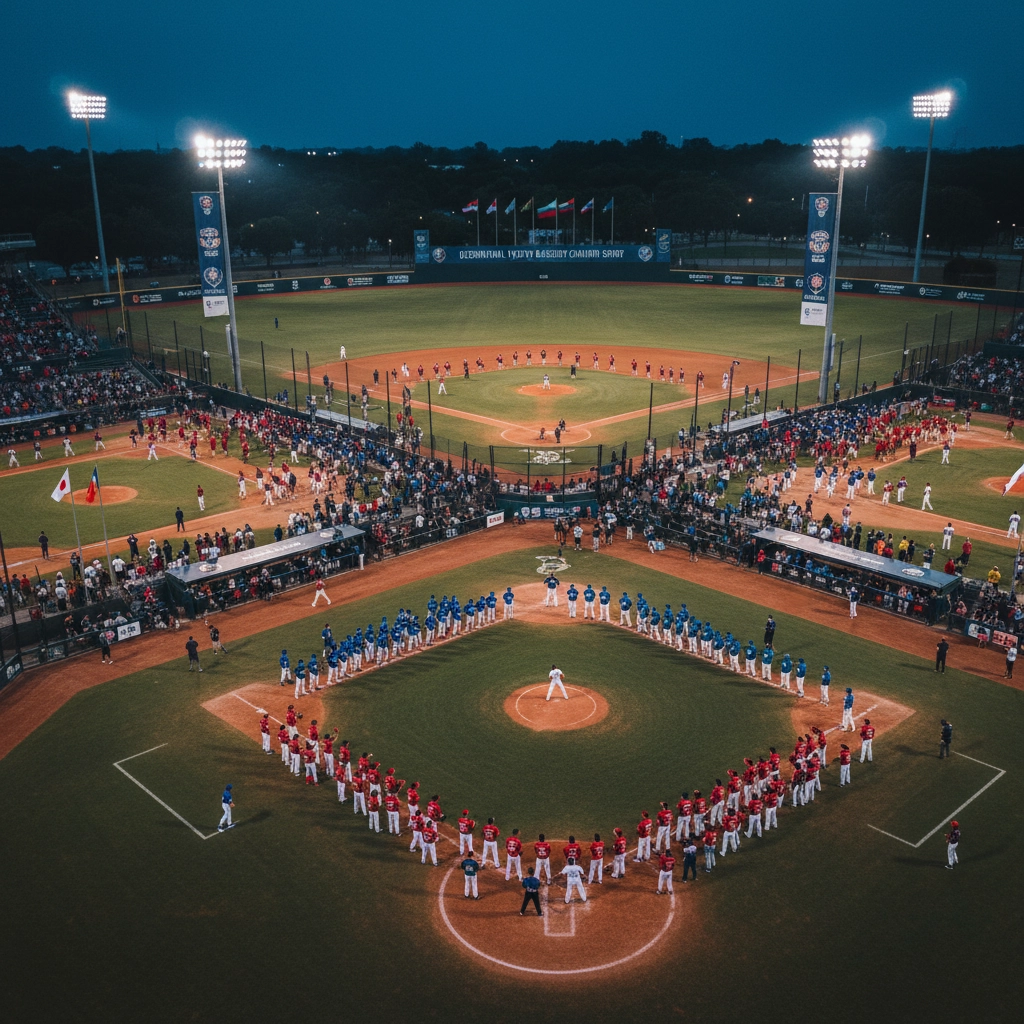
Let's get real about what each path offers:
| What Matters Most | Canadian Tournaments | International Tournaments |
|---|---|---|
| Scout Exposure | Solid for Canadian colleges, limited for US schools | Extensive US college and pro scouts |
| Competition Quality | Elite at national level, variable regionally | Consistently high across most events |
| Development Resources | Strong national team infrastructure | Professional-level facilities and instruction |
| Financial Impact | Family-friendly (relatively speaking) | Significant investment required |
| College Recruitment | Great for Canadian universities | Gateway to US Division I programs |
| Professional Pathways | Through national team system | Direct MLB scout visibility |
So, What's the Move?
Here's where we get practical. Your decision shouldn't be based on what worked for some kid from Texas whose dad happens to own an oil company. It should be based on your specific situation.
For the elite 16u-18u player with serious pro or D1 aspirations: International tournaments, particularly Perfect Game showcases, are almost non-negotiable. Those MLB draft statistics don't lie: if you want to be seen by the people who matter, you need to be where they're looking.
For developing players (9u-15u): Canadian tournaments offer incredible value. The Baseball Canada Cup system provides a clear progression path without breaking the bank. Your kid gets quality competition, professional instruction, and the chance to represent their province. Plus, you won't need a second mortgage to participate.
For families watching every dollar: Canadian regional tournaments and Little League programs deliver solid development and competitive opportunities without the international travel costs. Sometimes the best investment is the one you can actually afford.
For players targeting Canadian universities: The domestic tournament circuit provides plenty of exposure for Canadian collegiate recruitment while building skills for potential future international competition.
The Strategic Play

Here's what we've learned from working with families across the country: the smartest approach is often progressive. Start with Canadian tournaments to build fundamentals, confidence, and competitive experience. As skills and aspirations evolve, gradually introduce international exposure.
Think of it like learning to drive: you don't start on the 401 during rush hour. You master the basics in a parking lot, then quiet streets, then gradually work up to highway speeds.
Many successful players have followed this exact path: dominating Canadian tournaments early, then transitioning to international competition as they approach college recruitment age. It's not about choosing one or the other; it's about timing your escalation strategically.
The bottom line? Both Canadian and international tournaments have their place in a young athlete's development. The key is being honest about your goals, realistic about your budget, and strategic about your timing.
What's your family's tournament strategy? Are you sticking close to home or ready to take on the international circuit? We'd love to hear about your experiences and help connect you with the right opportunities through our tournament network.